




©2011 Deborah Richardson



Privacy Policy
Copyright



Turvey House
Turvey House is built in the Italian Style with a Welsh slate roof and overlooks the pretty river Ouse at the entrance to the village.It was built by John Higgins of Weston Underwood as a home for himself and his wife, Martha nee Farrer.
John brought the land where Turvey House now stands, together with other land in
Turvey, including the inn, the Tinker of Turvey, and the Mordaunt's family mansion,
Turvey Old Hall, in the late 1780's from his father in-
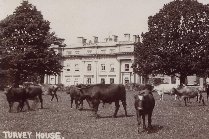
In 1792, John Higgins built Turvey House, overlooking the Ouse valley across to the little village of Cold Brayfield.
When John died, in 1813, he was buried in Weston Underwood and his eldest son, Thomas Charles Higgins, took over the House.
Thomas also built Turvey Cottage and Woodside House as well as rebuilding many of his cottage properties throughout the village.
Who Worked in Turvey House?
In 1851 the following 12 servants lived in Turvey House, tending to the needs of Thomas Charles Higgins and his family.
- A butler
- Footman
- Governess
- Nurse
- Cook
- 2 upper house maids
- Under house maid
- Nursery maid
- Upper laundry maid
- Under laundry maid
- Kitchen maid.
The entrance is 27ft by 30ft and has a domed roof which reaches to the top of the house.
The Drawing room is 52ft by 30ft, the Billiard room is 19ft by 18ft and the Dining room is 35ft by 19ft.
At the time of its letting on 11 October 1931, Turvey House contained the following rooms:
4 reception rooms
Billiard room
21 bed & dressing rooms (yes, that does say 21)
2 Bath rooms
'On the Upper Floors, which are approached by two Staircases are:
Ten Best and Secondary Bedrooms, six maidservants' rooms, two bedrooms for men, day and night nurseries, schoolroom, there W.C.'s, bathroom etc
Hot and Cold Water, and Gas, are laid on all over the House, and the Reception Rooms and Best Rooms face due South.
The domestic offices are on the ground floor, and include Housekeeper's room, Butler's
pantry with plate, closet, Servants' hall, kitchen completely fitted with range,
hot plates etc., scullery, larders, laundry, wash-
The drainage is modern and of the best description.
An abundant supply of excellent water, which has passed Dr. Voelcker's analysis, supplies the house by gravitation.'
In the ground there was stabling for nine horses as well as garages and harness and saddle rooms. There was even a blacksmith shop.
The gardens included a 1 acre Kitchen Garden, a tennis court, potting sheds, heated greenhouse and fruit room.
Down by the river Ouse there was a Boathouse and a Bathing House.
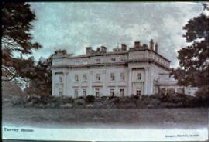
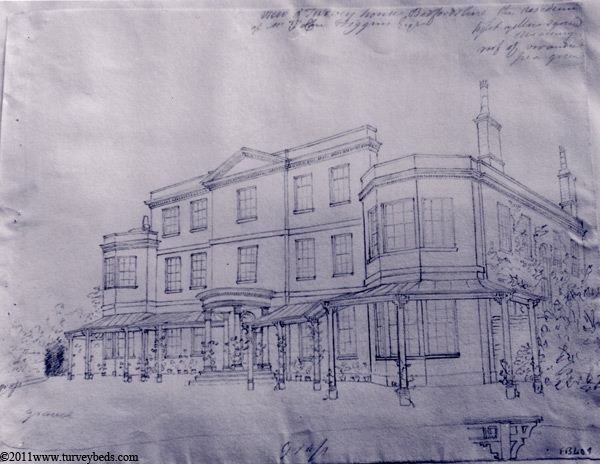
By 1868, Turvey House was owned by Major Willam Francis Higgins. He was still there in 1881, with his wife Fanny.
It was occupied by George William and Lady Elizabeth Taylor.
In the 1880’s, Turvey House often saw Rook Shooting parties.

Click here to see when Turvey House is open to the public..
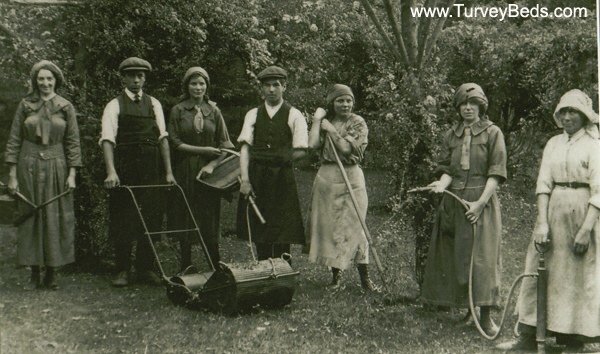
Turvey House servants of 1900
Click the image to enlarge.


In 1911, Turvey House was lived in by a rich Lancashire widow called Mabel Stenhouse Thompson.
She was the daughter of Sir Edward Bates 1st Bt.
Mabel had been married to Frederick Bellairs Thompson (died 1882).
Mabel died on 25th April 1931. She had not made a will. Click here to read the newspaper notice.
Turvey House was then let -
In 1911 Mabel lived with her 28 year old son, Arthur, and had 6 servants at Turvey House:
Lydia Still -

Turvey House is open to the public
a few times a year
The house is also used for weddings and events:
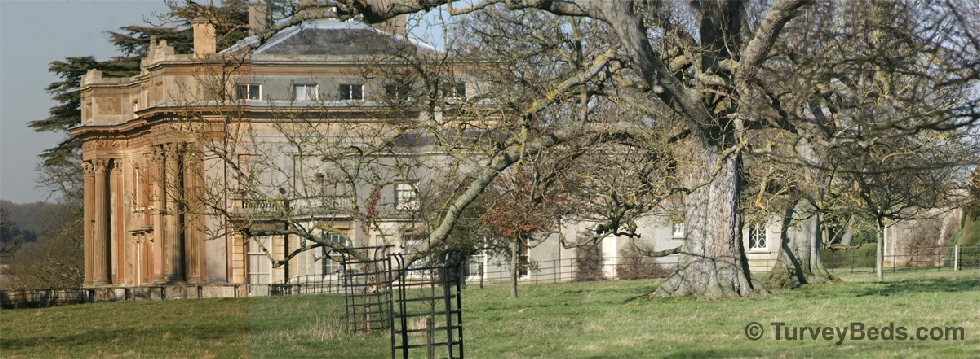
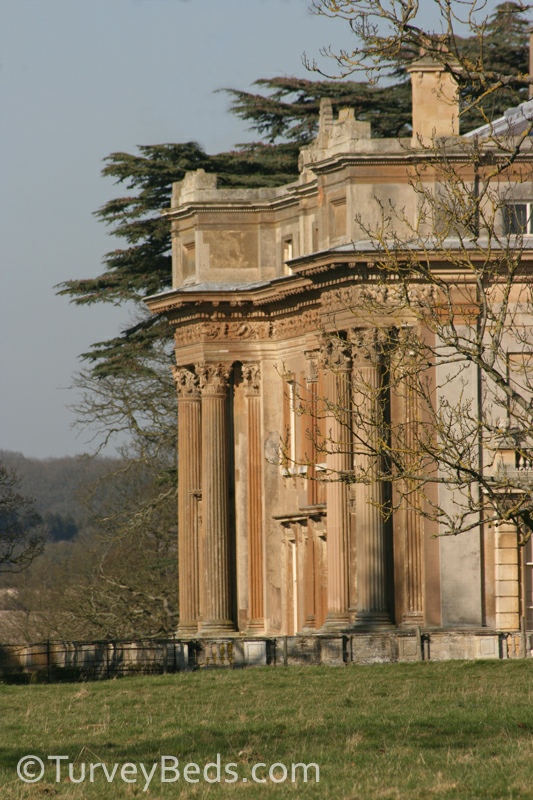

Click here to read the architectural details of Turvey House on the British Listed Buildings website.