







©2016 Deborah Richardson





Privacy Policy
Copyright


Turvey Mill
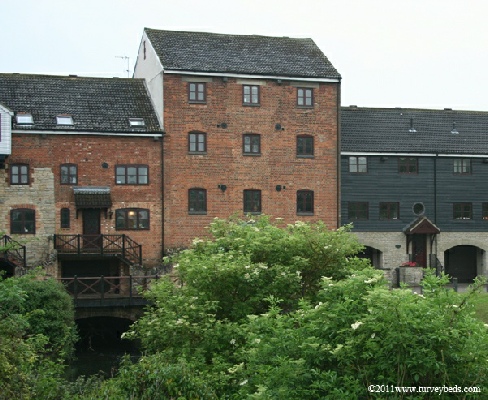
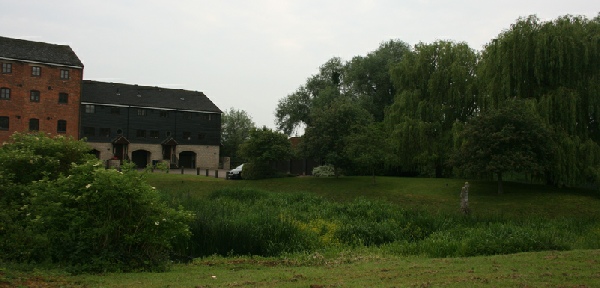
Turvey Mill as it is today (June 2011).
Click the picture to enlarge.
Many mills must have stood on the River Ouse at Turvey, we can only hazard a guess but about 6 would seem likely.
There were 26 mills on the Ouse in Domesday book, including at least one at Turvey.
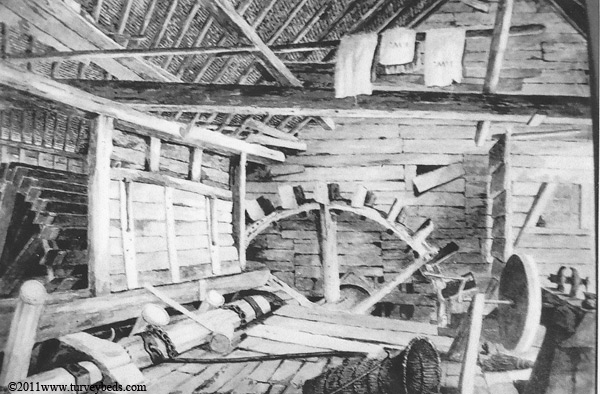
The interior of the mill in its heyday. Click the picture to enlarge.
Fire at Turvey Mill!
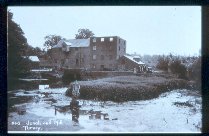
A terrible fire on 13th November 1885 caused much damage to the mill, leaving little more than a chimney. This survived until 1935 when the Territorial Army demolished it.
The picture above is of the mill, gutted after the fire.
Wetting the Wheels
The still water by the mill, near Turvey Bridge, has gentle slopes leading down to the banks. These slopes were for carts to be wheeled down so that the wheels could be wetted.
Why? Well, cart wheels were made from a number of pieces of wood, carefully slotted together. Over time, as the wood naturally dried out, the wood would shrink and the joints become loose -
This also was a useful technique for metal rimmed wheels, as the natural drying out shrinkage would cause them to become loose if the wood was not periodically wetted.

Over the years the mill has been a...
Flour mill
Food store in World War I
Animal foodstuffs mill
Potato crisp factory
Multitherm factory
Luxury flats
The Miller
The miller ground the wheat for both the villagers and the nearby farms. He also received payment for fishing rights for the river. He was well known for his big, salty eels which he caught in traps set in the river near the mill.
One of the millers was called Mr Sevens -
Turvey Mill Today
A current (2011) resident of the Mill tells me that there are 6 houses in it now. Three at each end and 4 flats in the tall part.
John Whitworth and Turvey Mill
The current mill was taken over by John Battams Whitworth (c.1852-
After it burnt down in 1885, he moved to Little Irchester, on the outskirts of Wellingborough and built the huge steam roller mill there in 1886. He worked this mill with his brothers Herbert and Newton.
This mill is still in use today.
See the Whitworths company website for a picture and more information on JB Whitworth.
Jonah and Eve
The statues that stand in the Mill Pond are very well known to locals.
So I have given them their own page on the Turvey Website!
To find out more, click here...
From 1953 to 1965 the Mill was managed by Mr Dashwood who worked for Mr Melhuish's company -
I have added a page for this company, so for more information click here:

The Mill Pond in front of the mill is a popular place for Turvey residents to enjoy -
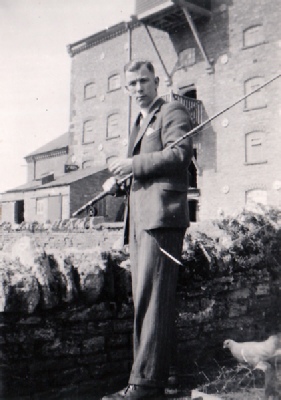
On the left is a young lad feeding the ducks, and on the right a young man setting off to go fishing by the mill.
Both pictures are from the 1950s.
Click either image to enlarge.
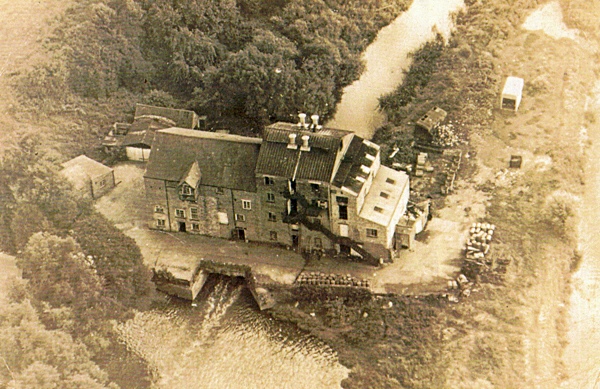
Aerial view of Turvey Mill, probably in the 1930s.
Click the image to enlarge
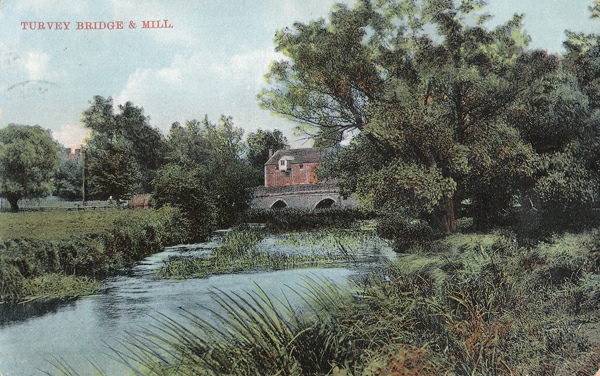
1909 view of Turvey mill from the North (from the other side of Turvey Bridge)
Click the image to enlarge